Choose the method before the machine

Drone, helicopter or manual transport?

No method is always cheapest. The load, terrain, distance, base location, weather and deadline determine the balance.

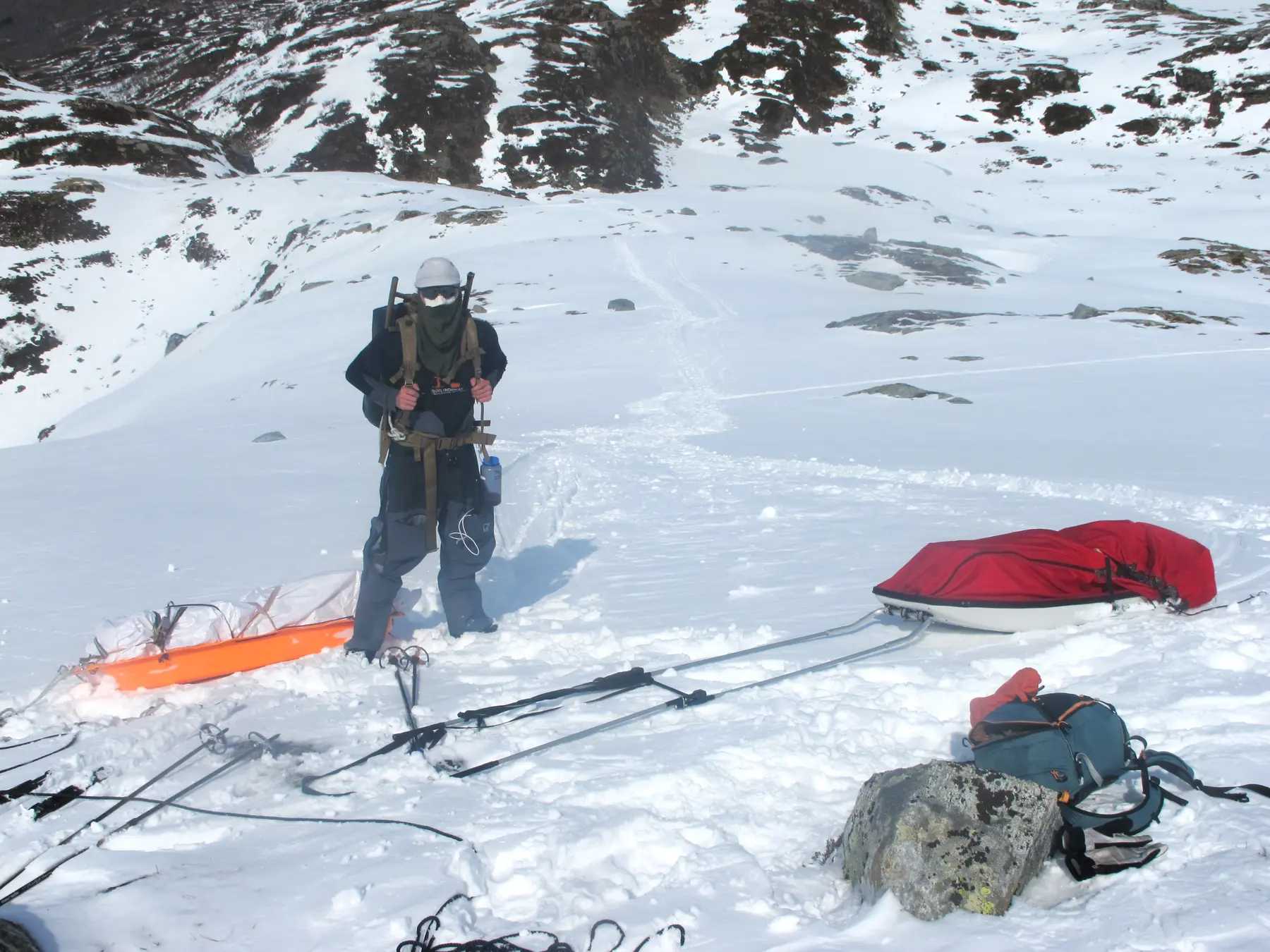
Manual transport in winter terrain, one of several possible transport options
The load and route conditions determine the suitable method.

Comparison

Four methods with different strengths

Figures without a route and load list can mislead. Here are the factors that usually guide the choice, rather than fixed answers.

01 / 04

Bæring og enkle hjelpemidler

Best suited to
Small and medium quantities, dense woodland, scattered points and jobs with practical work.
Key limitations
Low daily capacity. Distance, elevation and the heaviest item strongly affect staffing.
How costs work
Low mobilisation costs, but labour costs increase with the number of person-days.
02 / 04

Båt, vogn eller vinsj

Best suited to
Where parts of the route follow water, farm tracks or a short, defined slope.
Key limitations
Depends on access, terrain, the season and safe setup options.
How costs work
Simple equipment can move large quantities if the route is suitable.
03 / 04

Cargodrone

Best suited to
Many items along a short, open corridor, especially repeated shuttles of heavy individual loads.
Key limitations
Weather, clear airspace, operational range, safety zones and specific-category authorisation.
How costs work
Mobilisation and operators cost money, but the marginal cost of each additional lift can be low.
04 / 04

Helikopter

Best suited to
Large total quantities, very heavy lifts and short time windows over open terrain.
Key limitations
Flights from the base, weather, landing or drop areas, noise and planning.
How costs work
A high hourly rate, but substantial lifting capacity can make multi-tonne jobs economical per kilo.

When carrying often wins

Small, short and complex jobs

On small one-off jobs, drone or helicopter mobilisation can account for a large part of the total price. Carrying is particularly relevant under tree cover, near cables, between scattered points or when people also need to set up, clear or position equipment.

Long and irregular objects may also be easier to handle on the ground than beneath a drone. The drawback is that each additional kilo over a long distance requires more working time.

When air transport wins

Large quantities in a clear corridor

A cargo drone can quickly move many 30–85 kg items between two defined points. A helicopter can move around a tonne in one lift. Air transport can therefore clearly outperform manual carrying when quantities are large and the route is suitable.

It is wrong to assume that drones are always more expensive because the equipment is costly. Repeated shuttle operations spread capital costs across many kilos. Heavy cargo drones still require an approved operator, risk assessment and operation in the specific category.

Our role

We provide ground transport

ResupplyNorway provides manual and combined transport using carrying and simple equipment. We assess loads, terrain and access to plan staffing and delivery.

Our part of the job can include packing, setup, transport and positioning equipment, as well as practical work on site.

See how pricing works →

Next step

Let the load determine the method

Send the total weight, heaviest item, map location and photos. We can then assess whether ground transport suits your route.

Describe your job
Call usDescribe your job